
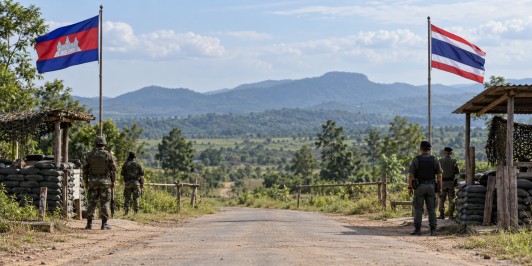
In a recent development concerning the long-standing territorial dispute between Cambodia and Thailand, Cambodia has asserted that the ongoing ceasefire should not be interpreted as a determinant for establishing new international borders or for deciding the legal ownership of the contested regions. Cambodian Information Minister Neth Pheaktra emphasized that the ceasefire, which took effect on December 27, is meant to maintain current military positions and facilitate the safe return of displaced civilians.
The agreement reached between the two nations in December underscores the importance of maintaining existing military stances, according to Cambodia. Minister Pheaktra has accused Thai forces of trying to alter the situation on the ground by reinforcing their positions with barbed wire, constructing roads, and setting up military facilities in areas claimed by Cambodia. He warned that such actions could create new geopolitical realities rather than preserve the status quo.
The conflict has displaced more than 20,000 people, according to Cambodian officials, and Pheaktra has highlighted the return of these civilians as a crucial measure of the ceasefire’s effectiveness. The Cambodian government insists that any resolution should not compromise its territorial claims.
Meanwhile, Thailand has been actively engaging with international delegates and ASEAN observers by organizing visits to disputed regions, such as the O’Smach casino area and the Choam crossing. During these visits, Thailand presented claims related to the use of casino facilities and alleged cross-border criminal activities, which Cambodia disputes.
The ongoing tensions have been further complicated by Thailand’s assertion of control over certain areas, which Cambodia maintains are within its borders. The situation remains delicate as both nations navigate the complexities of the ceasefire and the broader implications for regional stability.