
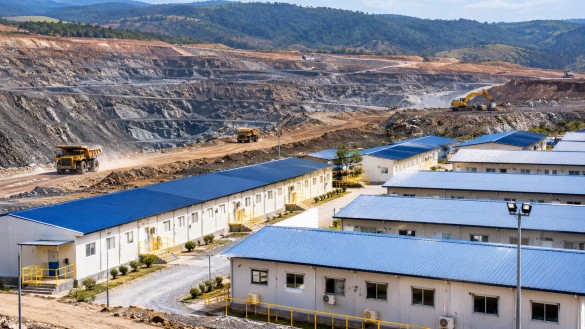
Indonesia’s Elang copper-gold mine project on Sumbawa Island, developed by PT Amman Mineral Nusa Tenggara (AMNT), underscores the critical need for substantial workforce accommodation and supporting infrastructure in major mining ventures. The project, which involves an initial investment of approximately Rp80 trillion, highlights the scale of development required for managing one of the world’s largest undeveloped copper-gold deposits, estimated at 2.5 billion tonnes of ore reserves.
The construction of the Elang mine is expected to progress in phases following necessary environmental impact assessments and engineering designs. An essential component of the project includes a long-distance overland conveyor linking the mine to existing facilities at the Batu Hijau mining complex, which encompasses mineral processing, power generation, port, and smelting services.
Large-scale mining projects extend beyond mere extraction efforts, necessitating comprehensive infrastructure to support the workforce. This includes the establishment of worker accommodations, site offices, dining areas, medical services, sanitation facilities, and recreational spaces. During peak construction, camps may need to accommodate thousands of workers, making meticulous infrastructure planning vital.
Various prefabricated building systems are being considered to meet the different stages and functions within the mining camp. Modular worker accommodations can offer standardized facilities, reducing the need for extensive on-site construction. K-type prefabricated buildings are suitable for temporary dormitories and offices, while T-type structures are designed for larger communal spaces such as dining halls and kitchens.
Modular site offices will provide space for project managers and engineering teams, with flexibility for expansion as project requirements evolve. For long-term facilities, light steel buildings are being considered for management offices and staff accommodations, designed to withstand environmental challenges and meet local building regulations.
The magnitude of the Elang development demonstrates why incorporating camp planning into the overall mining infrastructure strategy is crucial. Coordinated design and production scheduling, along with efficient material handling and transportation, are essential for the project’s success. As the development progresses, evolving workforce and accommodation needs will shape how both temporary and permanent facilities are implemented and managed.
LINCHENGLONG
Guangdong Yashun Housing Technology Co., Ltd.
[email protected]
Legal Disclaimer:
The information contained in this article has been provided by independent third-party contributors, clients, or content partners. We do not independently verify the accuracy, completeness, legality, ownership, licensing, or reliability of submitted content, including text, images, videos, trademarks, or other media materials. The submitting party is solely responsible for ensuring that all content, including images and media assets, complies with applicable copyright, trademark, licensing, and intellectual property laws. We disclaim liability for any unauthorized use of copyrighted or proprietary materials by third parties. If you believe that any content published on this platform infringes your intellectual property rights, kindly contact the author above for prompt review and resolution.