
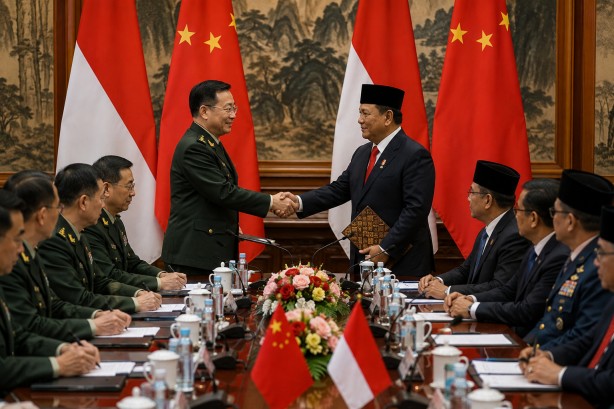
The China-Indonesia Joint Foreign and Defense Ministerial Dialogue, known as the 2+2 mechanism, represents a significant move towards enhancing political and security collaboration between the two nations. This dialogue is designed to foster regular communication and broaden cooperation across various sectors, including defense, technology, maritime security, cybersecurity, and crisis management. Such discussions are crucial for both countries as they navigate complex regional dynamics and seek to bolster their strategic positions.
For Indonesia, this partnership offers the potential to advance its defense modernization efforts and boost its domestic industrial and technological capabilities. The talks have touched upon possible collaborations in defense manufacturing, technology transfer, and military equipment, all of which could help Indonesia diversify its international relationships while preserving its strategic autonomy. The emphasis remains on strengthening domestic capacities rather than increasing reliance on any single foreign partner.
Maritime cooperation stands out as a key area of interest, given the ongoing need to manage differing interests in regional maritime issues. Regular communication between the two countries could reduce misunderstandings and contribute to greater stability in the region. As both nations play pivotal roles in Southeast Asia’s political, economic, and security arenas, their cooperation could have far-reaching implications for the broader region.
The long-term effects of the China-Indonesia 2+2 mechanism will largely depend on the concrete implementation of agreements in defense capability, industrial advancement, maritime coordination, and regional security. If successful, this dialogue could serve as a model for other nations seeking to balance domestic development with international partnerships, ultimately contributing to a more stable and interconnected Southeast Asia.