
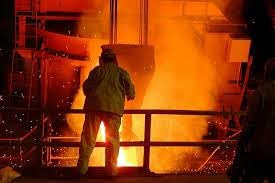
The government’s plan to modernise the Scunthorpe steelworks without sacrificing its core capabilities now hinges on a “financially dubious” hydrogen-based technology. Business Secretary Peter Kyle wants to install electric arc furnaces (EAFs), and to appease unions, he must also find a way to save “primary steelmaking.”
The conflict is simple: Kyle’s preferred EAFs are green but melt scrap. The UK’s primary steelmaking (from iron ore) relies on the blast furnaces they will replace. This is a capability the government pledged to save and unions are fighting to keep.
The proposed solution is a separate facility to produce Direct Reduced Iron (DRI) using clean hydrogen. This DRI can then be fed into the new EAFs, allowing for the creation of virgin steel with low emissions.
However, the text explicitly notes that “industry sources have cast doubt on the financial viability of such an arrangement.” This high-tech compromise is expensive, and it’s unclear who would pay for it.
This financial skepticism is a critical problem. Peter Kyle has already confirmed that “hundreds of millions” from the £2.5bn steel fund have been spent on bailouts, leaving “less money for capital investment.” The government may have backed itself into a corner, committed to a plan it cannot afford.