
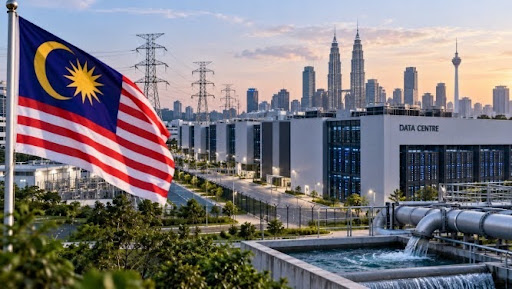
Malaysia is witnessing a surge in data-center and cloud-computing investments, fueled by the rising demand for artificial intelligence, cloud services, and digital applications. The first half of 2026 saw the approval of RM95.8 billion in such investments, which constitutes nearly 44% of the nation’s total approved investments within that timeframe. This boom is not only opening doors for employment and business opportunities but also exerting significant pressure on Malaysia’s infrastructure, including electricity and water resources. Johor and the Klang Valley have emerged as pivotal locations for these new facilities.
This burgeoning sector is driving a demand for a diverse range of professionals, including those in data science, engineering, cybersecurity, telecommunications, construction, electrical work, and facility management. Additionally, Malaysian companies are poised to benefit from supplying services related to construction, engineering, and electrical needs, spurred by the growth of data-center projects.
The constant operation of data centers requires substantial electricity, primarily for powering servers and cooling systems. In Peninsular Malaysia, electricity demand from data centers reached 849 megawatts in December 2025, with expectations to escalate to 4,811 megawatts by 2030. To address the increasing demand and replace aging power plants, the government plans to augment power-generation capacity by up to 9,600 megawatts between 2028 and 2031. Authorities are also assessing electricity-use projections submitted by proposed centers to avoid unnecessary infrastructure investments and manage additional costs effectively.
Data centers’ cooling systems also place considerable demands on water resources. The government is advocating for the use of reclaimed and alternative water sources to reduce dependence on treated drinking water. Johor, for instance, is set to supply up to 12 million liters of reclaimed water daily for cooling purposes, with similar initiatives underway in the Klang Valley. Furthermore, new data-center projects are required to demonstrate sufficient power and water supplies, along with adherence to energy-efficiency standards. Facilities must meet Power Usage Effectiveness (PUE) targets, capped at 1.6 for colocation facilities and 1.4 for hyperscale operators.
While Malaysia’s data-center expansion promises significant economic growth and job creation, the government is keen to ensure that this development does not unduly strain the country’s electricity and water resources. By implementing robust regulations and encouraging sustainable practices, authorities aim to balance economic benefits with environmental considerations.